Healthy Habits: 21 Small Daily Habits People Actually Keep
The healthy habits people keep are not the big ones. They are small enough to do on a bad day, they take under five minutes, and each sits on a moment that already happens: the kettle, the front door, dinner, Sunday morning. Here are 21, sorted by when they fit, with what each actually does. Pick two. What comes back first is not a health result but the sense that parts of the day are yours again.
What are healthy habits to start in the morning?
The morning ones matter most: they decide who runs the rest of the day, you or whatever arrived first.
1. Ten minutes of real daylight, first thing. Coffee on the step, or the long way to the bus. Your body clock sets itself by morning light, so tonight's sleep starts now: in a study of office workers, those with more light between eight and noon fell asleep faster that night and woke less. Outside, not through glass.

2. Airplane mode until you are dressed. Not a detox, an order of events. The inbox will still be there in twenty minutes, and you will read it as a person who has had a shower rather than a pair of eyes that just opened.
3. Eat breakfast sitting down, even if it is toast. A review of two dozen studies found that eating while distracted adds a little in the moment and noticeably more later in the day, because the meal never registers as having happened. Four minutes on a chair, and lunch is a decision rather than a raid.
4. Leave ten minutes before you have to. Walk to the train instead of running for it. A morning that starts with a sprint and an apology already belongs to the clock.
5. Put one thing back before you leave. The mug, the sweater on the chair. One, not the kitchen. Evening you walks into a home left by someone who was expecting you.
6. Wake at the same time on weekends, give or take an hour. Chronobiologists call the weekday-weekend gap social jetlag, and the name is exact: the body treats a two-hour shift on Saturday like a flight across two time zones. Keep it to an hour and Monday loses most of its weight.
What small healthy habits fit into a workday?
Three that need no equipment, and nobody has to notice.
7. Two breaths in, one long out, for five minutes. In through the nose, a second short sip to top up, then a slow exhale through the mouth that lasts longer than both. This is the breathing exercise the research actually backs: in a Stanford trial, five minutes a day for a month lifted mood more than the same five minutes of mindfulness meditation, and the gain grew with the days kept up. Also the one to do before a call you are dreading.
8. A short walk right after you eat. Two to five minutes, around the block or down the corridor. A meta-analysis on breaking up sitting found a light walk after a meal flattens the blood sugar rise that follows, better than standing does. Whether that is the 3 p.m. slump is less settled than the internet says, but it is the cheapest thing to try.
9. Say a few words to a stranger. The barista, the person in line, the dog's owner. Most of us expect it to be awkward, and the expectation is the finding: commuters asked to talk to the person next to them predicted a worse ride and reported a better one, and in a second study those told to greet and thank their driver got off in a better mood than those kept silent. A sentence counts.

What are good evening habits for better sleep?
Evening habits mostly do one thing: draw a line between day and night, so the night is not the day continuing with the lights on.
10. Change the minute you get home. Work clothes off before you sit down. People who manage to switch off from work in the evening sleep better and are less worn down, and switching off is easier with a signal. The workday ends when the clothes come off.
11. Brush your teeth right after dinner. Not at midnight. Once your teeth are clean the kitchen is closed, and the late snack has to get past an extra step it mostly will not bother with. No trial behind this one, just a cue that works.
12. Lamps only after nine; the big light stays off. In a Boston sleep-lab study, ordinary indoor light in the hours before bed delayed the evening rise of melatonin in almost everyone and cut it short by about an hour and a half. Lamps are not darkness, but they are the version you can keep.
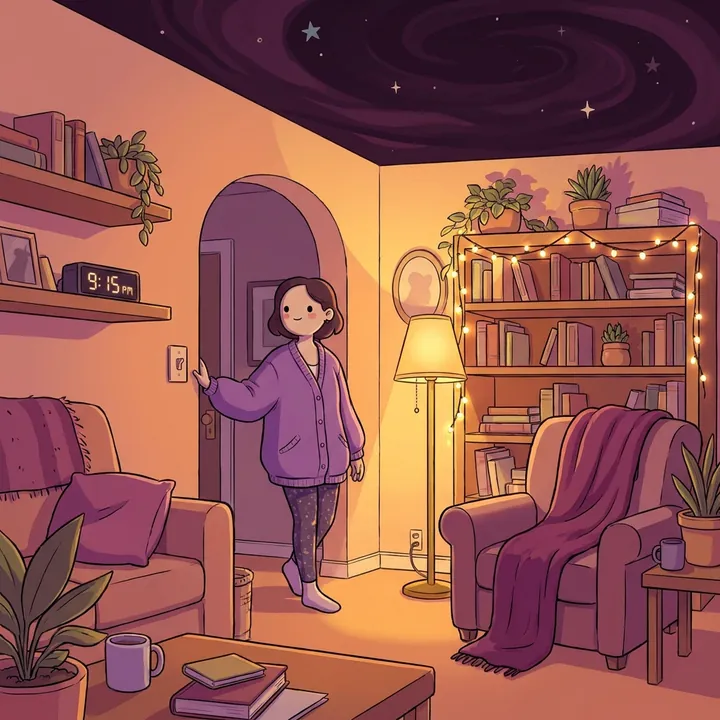
13. Phone to grayscale after ten. It is in the accessibility settings. Without color the feed goes strangely dull, which is the point: in a study of college students, those who switched for eight to ten days used their phones about 38 minutes less a day without trying to.
14. Socks on in bed. Warm feet open the vessels that let heat out, your core cools, and that cooling is one of the strongest predictors of how fast sleep arrives. A tiny study of six people in bed socks had them asleep a few minutes faster. Expect warm feet, not miracles.
15. Write tomorrow's list before the lamp goes off. Five minutes, specific, on paper. In the one lab study of this, students wrote either tomorrow's tasks or today's finished ones before sleeping: the to-do writers fell asleep about nine minutes faster, and the more specific the list, the faster. If what keeps you up is bigger than tasks, the brain-dump method is the longer version.
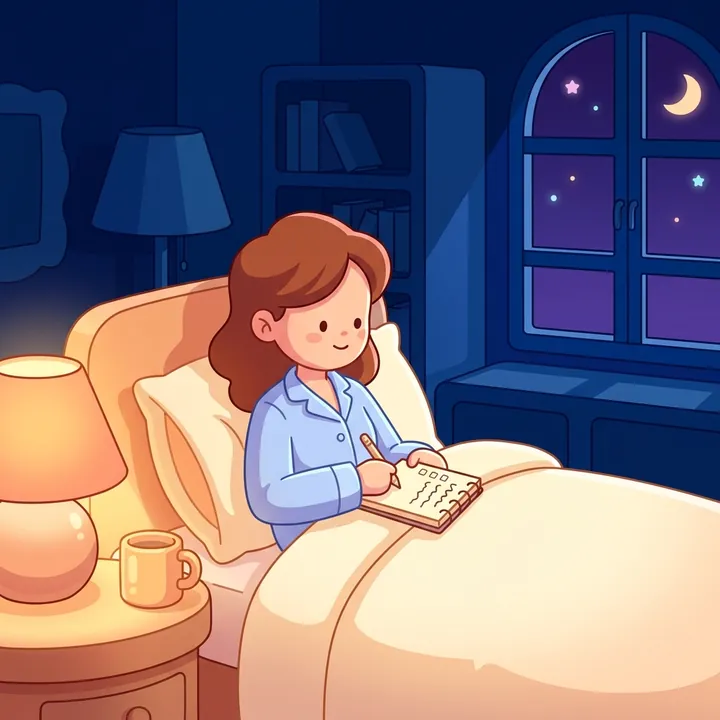
16. Sleep with the window open a crack. A shut bedroom fills with your own breath by morning, and stale air is part of why some mornings feel heavy before anything has happened. A Danish study of fourteen students found better measured sleep and sharper thinking the next day with it open. Small, but free, and you feel it within a week.
If your sleep has been broken for weeks, or the mornings are heavy whatever you do, that is a different pattern from the one these habits are for, and it deserves a doctor rather than a list.
What are good Sunday habits for the week ahead?
Most Sundays go to recovering from the last week or dreading the next. Five habits that give the day a shape of its own.
17. Leave the house before noon. The market, a walk, a coffee you drink standing up. A Sunday that starts outside has two halves. A Sunday that starts at two is over by four.
18. Change the sheets before it gets dark. Best sleep of the week, and a bed that is ready before you are tired. It also marks the week as finished, which Sunday otherwise fails to do.
19. Call home, ten minutes, same time every week. The fixed slot matters more than the length: when the call has a time, nobody has to be the one who decides to make it, and ten minutes a week is more of their voice in a year than the long call you keep meaning to have.
20. Pick the week's best photo and heart it. Thirty seconds. By December you have fifty-two pictures of what the year was actually like, which is almost never what you would have guessed in a bad week.
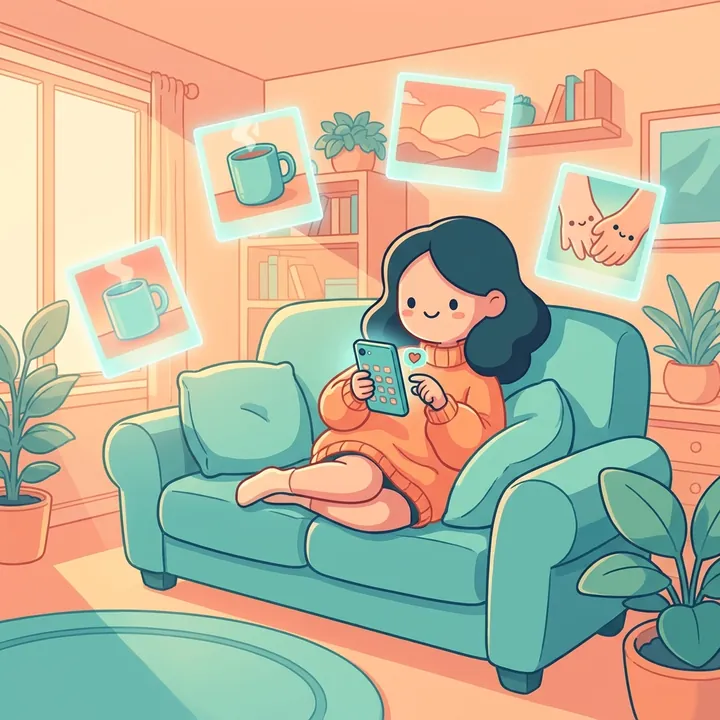
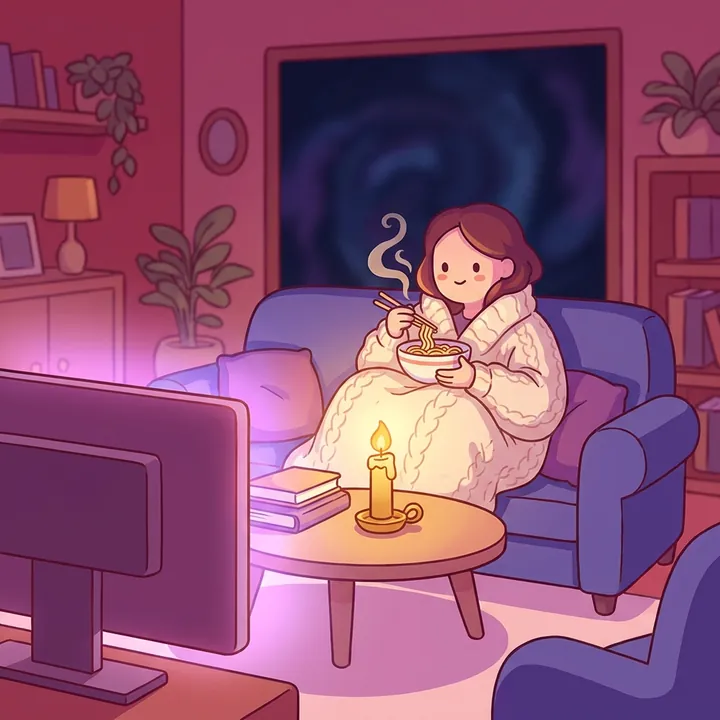
21. Plan one nice thing for Sunday evening. Not a project: the film you have been saving, the good noodles, a bath with the door locked. Give it a time. In experiments on how people feel about events, looking forward to something produced stronger feelings than looking back on it, so a planned seven o'clock works on the whole afternoon, and Sunday evening stops being only the night before Monday.
How do small daily habits add up to feeling in charge?
Faster than the health effects do, which is what makes them keepable.
None of these will show on a blood test for months. Something else shows in the first week: the day has points in it that you decided. Routine gets a bad name, as if it were the opposite of a life, but a psychologist who tested it in five studies, on flights, in city neighborhoods, in a lab and in lecture-hall seating, found the same thing each time: doing the routine version, people felt safer, more confident and better than when they did not. The routine does not make the world safer. It gives you a hand on it, and the rest of the day borrows from the two moments you ran.
It helps to say which two out loud to someone, and that is where Cave fits, honestly: no habit tracker, no streaks, no reminders, which for this kind of habit is the point. What it has is Flamy, a small flame you chat with or call, who keeps what you tell it by topic. Tell it which two you picked and what the mornings are like. A month on it can ask whether the daylight walk is still happening, or notice that the sleep thing came up in September too, which is usually when a habit turns into something you understand about yourself. Go quiet for a few days and it may send one short line asking how you are, or a song it thinks fits the week. And every week you have talked becomes a painted highlight, so by spring the habits are visible in the weeks themselves rather than in a grid.
How many healthy habits should you start at once?
Two. Twenty-one is a menu, not a program. One for the morning, one for the evening, each attached to a moment that already happens: daylight after the kettle, lamps when the plates go in the sink. The moment does the remembering. Then the only rule is that the floor counts: two minutes of daylight from the doorstep is a yes, and a miss is a miss. The second miss is what ends habits, and how to be consistent covers the day after. Add a third when the first two stop needing a decision, usually in the second month. If none of the 21 feels worth doing at all, that is a different problem, and how to get motivated is where to start.
FAQ
What are the healthiest daily habits?
The ones with the strongest evidence are the least glamorous: a regular wake time, weekends included; daylight in the first hour; a short walk after meals; dim light before bed; and a few words with another person every day. Each takes under ten minutes. Big changes to diet and exercise help too, but those are the habits people drop, and these are the ones they keep.
How long does it take to form a healthy habit?
Longer than 21 days. A 2024 systematic review of habit formation studies found that new health behaviors typically took about two months to feel automatic, with a range from four days to nearly a year depending on the person and the habit. Small habits with a fixed cue sit at the fast end, which is the case for starting with five-minute ones.
What are some healthy habits that take 5 minutes or less?
Five minutes of two breaths in, one long out. A two-minute walk after lunch. Changing clothes when you get home. Lamps at nine. Tomorrow's list before bed. One thing put back before you leave. The length is the point: a five-minute habit survives a bad day, and a bad day is where most habits end.
What is the best way to track healthy habits?
Count the times you came back, not the days in a row; a streak resets on the day you most need encouragement. If you would rather talk than tick boxes, Cave keeps what you tell Flamy in a memory sorted by topic you can open and read, and paints each week as an illustrated highlight, so months later you can see which weeks held. No tracker, no streak to break, and your memory is never used for training.