How to Start Over in Life: What Resets and What You Keep
Starting over means rebuilding the one or two parts of your life that have stopped working, on purpose, and carrying the rest with you: what you can do, the people who stayed, what you learned the hard way. Name the part. If something ended, use the first three months, while the old routines are loose, to put new ones in. If nothing has, run small tests instead of waiting to be sure. Expect months before it feels like a life, and keep a record: the feeling lags behind the facts.
What does starting over actually mean?
The phrase promises a clean slate. There is no such thing, and that is the good news, because a clean slate would mean losing the three things that make a restart possible.
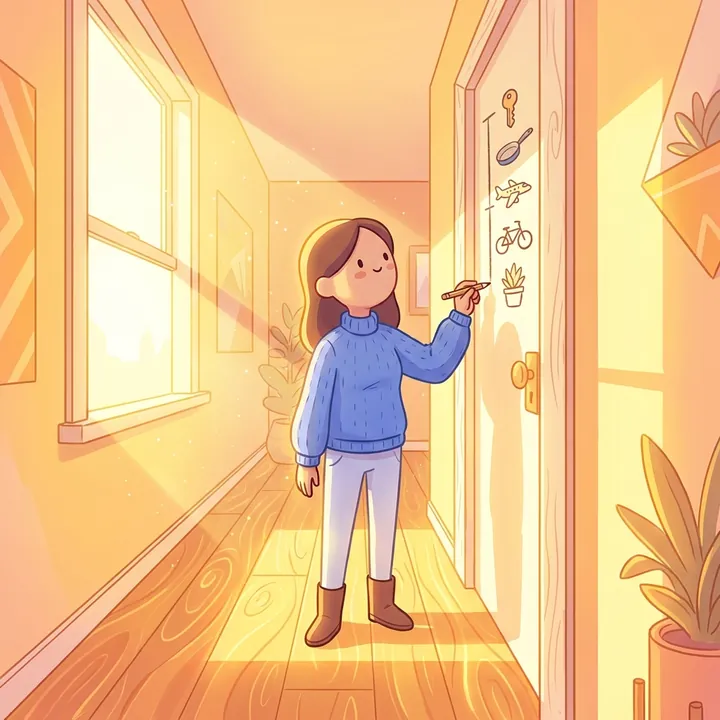
- What you can do. Hold down a job, run a kitchen, sit through a hard conversation, move cities, be alone. Make the list the way children's heights get marked on a door frame: what can you do now that you could not at 22? None of it stays behind.
- The people who stayed. An ending thins the list, which hurts, and then the list is the list. Two people who pick up the phone are a bigger asset in a restart than most savings accounts.
- What you learned, mostly the hard way. What you will not put up with again. What you wanted more of than you admitted. Expensive to get, and it travels.
And one thing never resets: you. Recovery programmes have a name for the belief that a new city will fix an old problem, the geographic cure, and the whole point of the name is that it does not work. That is not an argument against moving. It is an argument for being exact about what the move is for, so that the part that needs rebuilding is the part you rebuild, and the rest comes along on purpose rather than by accident.
Starting over, done well, is that: pick the part, carry the rest. By what ended, it looks like this.
| What ended | What resets | What comes with you | First two weeks |
|---|---|---|---|
| A city | Routines, people, places | Work, taste, friends by phone | Same cafe, one name, yes to invites |
| A relationship | Evenings, weekends, the plan | Friends, work, how you love | Fill the evenings, tell two people |
| A job | Weekdays, income, the title | What you learned, who you keep | Money map, same hours, one test |
| Everything | Nearly all of it | You, and whoever picks up | Income, a room, one person |
How do you know if you need to start over or just change one thing?
Most of the time the wish to start over is a wish to start over one part. It only feels like the whole life because the part touches everything. Three questions find it.
1. Lost, or just tired? The week was long, you slept badly, and the brain reports that this whole life is wrong, because that is what tired sounds like from the inside. Sleep, a weekend, then ask again. If the answer shrinks over a rested week, it was tired. If it is still there on Tuesday morning after a good Sunday, it is real, and it has earned the next two questions.
2. A Tuesday in each life. Not the first week in the new place, the fortieth. Picture an ordinary Tuesday in the life you would start: the morning, the commute, three in the afternoon, the evening. Now the same Tuesday in this life. If the two are identical with a different skyline, the city is not the part. If one piece of the imagined Tuesday is what you actually wanted, an evening that is yours, work that ends when it ends, then that piece is the part, and it may not need the skyline at all.

3. Which piece of their life? There is usually a life you keep looking at. You do not want all of it. Name the one piece you do: the job with a door that closes, the flat they live in alone, the way they talk to their parents. One piece can be built where you are, this year. A whole life cannot be built anywhere.
The quickest way through all three is to say the wish out loud to someone who will ask what you mean. "I want to start over" lasts about a minute in a real conversation before it turns into "I want to stop doing work I do not care about" or "I want one evening a week that is mine". At one in the morning that friend is asleep, which is where Cave fits. You type "I want to start over." to Flamy, the small flame you chat with or call, and what comes back is not agreement but the next question: "ok. which part, the job or the evenings?" Ten messages later the part has a name, and the night it got one is kept, so in a month you can open it and check whether the name still fits.
How do you start over after something ended?
A move, a breakup, a job that stopped. The ending did the deciding for you, and alongside the loss it opened a window that the research on habits is unusually clear about. Habits live in their settings. Wendy Wood and her colleagues followed students who transferred to a new university: exercising, reading the paper and watching television carried over only where the setting stayed similar, and where it changed, the habit lost its pull and what the students did came down to what they meant to do. A later field experiment on people who had just moved house found them easier to nudge into new routines than people who had stayed put, a small effect but a real one, and put the window at about three months.
So the first three months after an ending are not the time to wait until you feel ready. They are the time new routines go in cheaply, because nothing is holding the old ones in place. After that, whatever you have been doing is the new habit, chosen or not. Three things go in first, in this order.
Fixed points. In a new city: the same cafe at the same time three mornings in a row, and by the second week they know your order. After a breakup or a divorce, the slots that emptied are the evenings and the weekends, so those get the fixed points: a walk at the same hour, a Saturday morning with the same shape, a standing Thursday with someone, booked before you feel like going. Fixed points matter more than they look, and the post on feeling lost has the evidence for why: routine is a large part of what makes days feel like they make sense.

People, before you feel like it. In a new city, say yes to every invite in the first weeks, including the boring ones, because the new-person invites run out. Learn one neighbour's name, at the mailboxes rather than at their door. Tell people you just moved here; everyone has a tip, and the tip is a conversation. It takes months and lands you one or two people, which is how making friends as an adult actually goes. After a breakup, the first people to call are the friends who faded while you were a couple; message them before you are sure they want to hear from you, because they usually do. The evenings are what getting over someone is mostly about, and the question is only ever what goes into them.

One aim for the first month. Something you can finish and that you chose: a room set up, a course started, a route run. Not the direction of your life. If it helps to say it precisely, the SMART goal builder turns a goal in your own words into a card in five questions. What the aim is for is that the month has a next, and the next is yours.
How do you start over when nothing is wrong, exactly?
This version is harder to begin, because nothing forces it and every reason to wait is reasonable. The life works. People would be surprised. And the usual advice makes it worse: figure out what you want first, then act.
Herminia Ibarra spent years studying people who changed careers and found it runs the other way round: doing comes first, knowing second. The people who waited for clarity stayed where they were. The ones who moved ran small experiments, an evening class, a side project, a conversation with someone already doing the thing, and learned what they wanted from how those felt. You do not find out whether a life fits by thinking about it. You find out by trying a piece of it.

So:
- Follow what you are a little curious about, not a big plan. The pottery studio you slow down past. The thing you have now read about twice. Book one session, not a course.
- Start again, badly, something that quietly stopped. The thing you loved at nineteen that did not survive the first job. It comes back faster than anything new, and it tells you what you are like when nobody is paying.
- Run the undo test. Could you reverse this in a year if you had to? A move, a job, a course: yes. Then decide faster, and stop treating it as permanent. The few things you cannot undo deserve the slow version.
- Ask whether it is a no, or a yes that is scared. They feel the same at night. Scared does not mean wrong. And if the life you have was mostly chosen by other people, one more question: if nobody ever knew, which would you pick? That is usually the answer.

If the part that needs starting over is the job, whether to quit is its own question. If you cannot name any part at all, that is a different problem with a different post.
How do you start over with nothing?
Then the list of what comes with you is short, and the order matters more. Two things come before any thought about who you are now. One: a money map on a single page, what comes in, what has to go out, and how many weeks that buys, because a number you can see is less frightening than one you keep re-estimating at night. Two: the nearest work that pays within a month, however far it is from the life you want. It is not the new life; it is the floor the new life stands on. Then a room that is yours, even rented, even with a borrowed lamp, and one person who knows where you are and would notice if you went quiet. The first three months are a floor, not a verdict. Judge the restart at a year, not at week six.
How long does it take to start over?
Longer than the montage, and less of it is misery than you fear. The routines take weeks, which is what the three-month window is. A place starts to feel like yours in months. The whole arc, from the ending to the day the new life is simply your life, is years: Bruce Feiler, who collected more than two hundred life stories for Life Is in the Transitions, puts the average transition at about five years. That is not five years of struggle. It is five years in which the middle is long, and in which almost everyone assumes the length means they are doing it wrong.
The trap in the middle is that the facts change before the feeling does. By month three the flat is set up, the job exists, there are two new names in the phone, and it feels exactly the way it felt in week one, because the feeling reports on the week, not on the distance. Without a record you cannot see the distance, and you will conclude nothing has moved when a lot has.

This stretch is where Cave earns its place. You tell Flamy what today was, by text or on a call, and it keeps a memory organised by topic that you can open and read. So in month three you can go back to week one: what you were afraid of, the aim you set, the names that were not in your phone yet. The weeks come back as illustrated highlights too, painted from your chats, so the ones you lived are there to look at rather than blurred into one feeling. Week one against month three is the comparison the middle hides, and you can only make it if someone kept week one.
What if you started over and still feel the same?
Then you have found the part you brought with you, and that is information, not failure. The city changed and the Sunday dread did not, so the dread was never about the city. The relationship ended and the sense of being behind stayed, so it was not about them. The part that came along is usually the inside one: how you talk to yourself, what you believe you are allowed to want, the kind of people you pick. It gets the same treatment the move got. Name it, test one small change, keep the record. This restart needs no move, and it is the one most people were after all along.

And look for the new life in places before you expect it as a feeling. Where did you feel most at home this month? A corner table, a kitchen, one walk. Go back there on purpose. The new life shows up as places before it shows up as a mood.
One thing said plainly, because it belongs here: if "start over" has begun to mean not being here at all, that is a different thing from a restart, and it needs a person tonight rather than a plan. In the US, call or text 988.
FAQ
Is it too late to start over at 30, 40 or 50?
No. Age changes what ended, not what helps. At 30 the restart is usually chosen; at 40 or 50 it more often arrives with a divorce, a layoff or a diagnosis, and what comes with you is a longer list: more skill, more people, more of what you will not put up with. The first three months and the small tests work at every age; the years add a clearer sense of which part needs rebuilding.
Is starting over the same as running away?
It is running away when the thing you leave is the thing you carry: if the Tuesday in the new life is identical with a different skyline, the move is a holiday from a problem that is coming too. It is starting over when you can say which part you are rebuilding and the rest is coming with you on purpose. The test is not whether you leave. It is whether you can name the part.
When is the best time to start over?
The nearest landmark. Research on the fresh start effect found that people begin things after temporal landmarks: the new year, a birthday, the first of the month, a Monday. A landmark makes beginning easier and does not carry you after that, so use the nearest one rather than waiting for the clean one. Monday is at most six days away.
How do you start over after a breakup or divorce?
Treat the evenings and weekends as the part that reset, and the rest as yours to keep: friends, work, the way you love. Fill the empty slots in the first weeks before they fill themselves with scrolling and checking. Let two people hear the unedited version. Expect the facts to improve before the feeling does, and keep a record so you can see it happening.
Can an app help you start over?
Not with the leaving, the moving or the money. What it can hold is the middle. In Cave you tell Flamy, a small flame you chat with or call, what today was; the chats become a memory organised by topic that you can open and read, and each week comes back as an illustrated highlight, so month three can be checked against week one. It is private, never used to train AI models, and a companion rather than a therapist.