Vision Board Ideas: 40 Examples and How to Make One That Works
The vision board ideas that last are pictures of you doing the thing, not of having done it: running shoes by the door, not a finish line; the hill twenty minutes from your house, not the one in Patagonia. Take most of them with your own phone. Pick five or six, add one honest picture of what usually gets in the way, and write a date on each. Then look at the board on a fixed day every month, not in passing, and say out loud what has moved.

What should you put on a vision board?
Five pictures of the doing, one honest corner, a date on each, and ten minutes in front of it on the first Sunday of the month. That is the whole method. The forty ideas below are what the pictures can be.
They are sorted by the part of life they belong to. The five categories most boards use, career, money, health, relationships and personal growth, are all here, split a little finer, plus one group at the end that most boards leave off. Nearly all of them are photos you can take with your own phone this week, and that is deliberate: a board made from your own life is much harder to stop seeing than one made from other people's. Each idea is a picture of a step rather than a result.
Work and money

- The tram at 8:15 with a coffee and the city going past, or your desk at 8:40 before anyone else is in. The job you want is a morning you would like before it is a title.
- A screenshot of your calendar with the same ninety-minute block on it every day, named after the project you keep not starting.
- The savings number that would let you leave a bad job, on a sticky note, with the month you reach it.
- One person whose working life you would actually take, photographed doing the work, not holding the award.
- The book or course that comes next, open, with a pen in it.
- The thing you keep telling people you are going to finish, with the word "done" written over it and a date underneath.
Your body
- Running shoes by the door at night, laces loose. Tomorrow's run gets decided tonight.
- The pool lane, the mat or the court on the morning it belongs to you, with "Tuesdays, 7 a.m." written across it.
- A plate you cooked, photographed in bad kitchen light. Not a food blog. Yours.
- Your bed, with the phone charging on the other side of the room.
- The hill or trail twenty minutes from your door, the one you will walk up on Sundays, not the one in Patagonia.
- The bike you will ride to work, with the lock already on it.
Home and the everyday
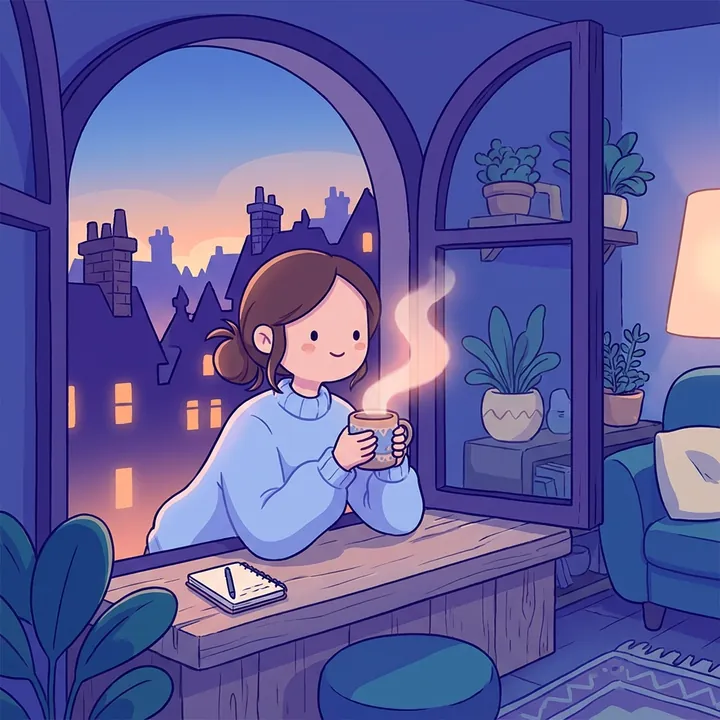
- A window, a cup of tea and an evening with nothing in it, phone in another room. One a week, kept like an appointment.
- One corner of your place as you want it: a chair, a lamp, a plant you have kept alive.
- Two tomato plants on a balcony. Not a garden, two plants.
- The shelf of books you have read this year, with space left on it.
- A table with six chairs and the food half eaten, people still sitting. Dinner at yours, once a month.
People

- A letter half written, on the sofa, because you will write four this year.
- A photo of the oldest person in your family, and beside it three questions you have never asked them.
- Two coffees and your friend's hand across the table, taken on a day you actually met, with "every second Sunday" under it.
- The group chat where the trip is being planned, with dates in it.
- The one event this year you will show up for even when it costs a flight: the wedding, the birthday, the reunion.
- The face of someone you owe a long conversation to.
Your head

- The phone face down on the coffee table at eight, and whatever the evening turns into once it is: a bath, a book, a bowl of noodles.
- A notebook open at a dated page: three lines a night, however the day went.
- The word "no" once, in your own handwriting, above a picture of the thing you say yes to out of guilt.
- A photo of yourself from a day you liked yourself, with "more of this" under it.
- A bench in the park, twenty minutes on a Sunday afternoon, nothing in your hands.
Places
- One trip, with the dates and the price written on it. Not six.
- A map of your own city with three neighborhoods you have never walked in, circled.
- The train window, not the destination: the route you will take instead of flying, once.
Things you make and learn
- A page of your own handwriting in the language you are learning, mistakes left in.
- The instrument out of its case, on a stand, in the room you actually sit in.
- The half-finished thing at its current ugly stage, the quilt or the shed or the website, with the next step written on it.
- The first page of the thing you will write: a date, and "page 1".
The honest corner
This is the group most boards leave off, because it is ugly. It is also the group that makes the rest work: a picture of what usually gets in the way, taken without flattering it, and a line under it saying what you do when it shows up. Write the lines first, at the kitchen table, honestly. They are the only words on the board that have to be true rather than pretty.
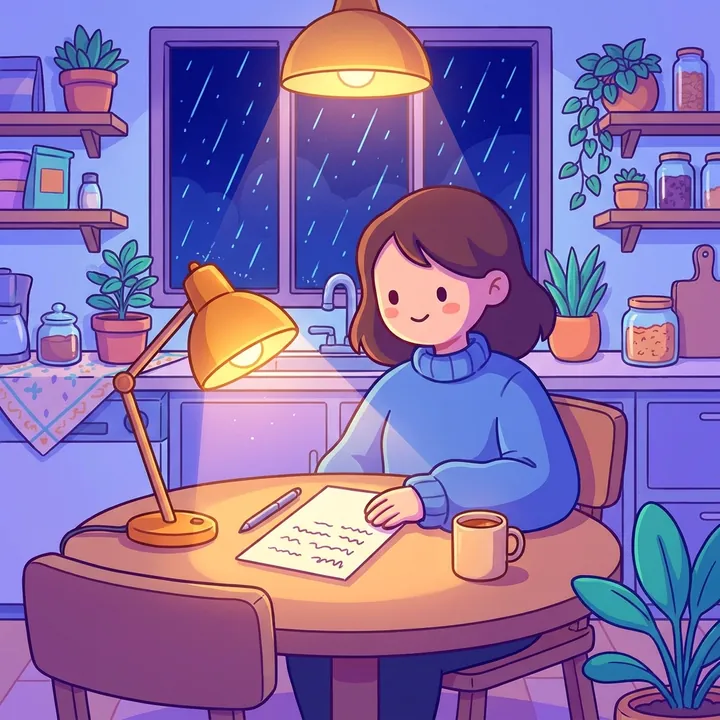
- The couch at 7 p.m., remote on the arm. This is where the evening run goes to die. Under it: "shoes on before I sit down."
- Your phone face up on the desk. Under it: "in the drawer until lunch."
- The empty fridge on a Wednesday. Under it: "shop on Sunday."
- A text that says "we should catch up soon!" with no day in it. Under it: "a day, or don't send it."
- The appointment you keep postponing, whoever it is with. Under it: "booked by the end of January."
Why do vision boards stop working?
Because of the kind of picture on them. The classic board is a wall of finish lines: the house, the body, the beach, the title. Looking at it feels good, and the good feeling is the problem.
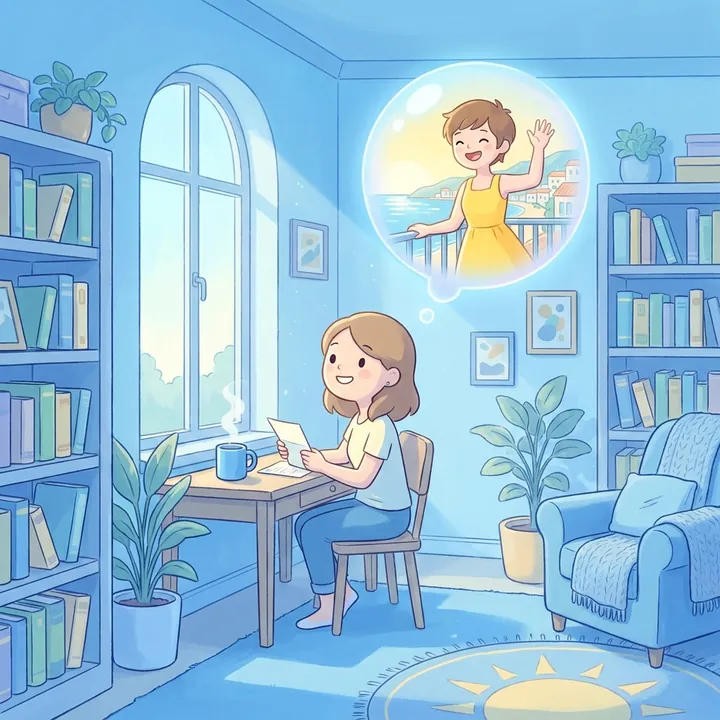
Gabriele Oettingen, a psychologist at New York University, has spent more than twenty years on what happens when people picture a wished-for future as if it had already arrived. In one of her experiments, people spent a few minutes imagining the coming week going perfectly, while a comparison group let their thoughts about the week go wherever they went. The first group felt less energetic afterwards, and a week later they had got less done of what they had planned. Her explanation is plain: a vivid picture of the result tells the body the result is here, and the body relaxes the way it does after a real win. An earlier set of her studies found the same with graduates looking for work, students facing an exam and patients recovering from hip surgery: the rosier the daydream about the outcome, the less effort went in and the worse it went. Picture yourself on that balcony in the new city for long enough and you have already had the feeling the balcony was for. A board of trophies is a daydream pinned to a wall.
The picture that does work is of the doing. At UCLA, Lien Pham and Shelley Taylor asked first-year students, in the week before a midterm, to spend a few minutes a day imagining either getting a good grade or sitting down and studying for it. The ones who pictured the studying studied more and scored higher, and the authors traced it to two things: they had ended up with a plan, and they were less anxious. Picturing the grade on its own did nothing for the grade. That is the whole case for the list above. A running shoe by the door is a plan you can see. A finish line is a feeling you have already had.
The wish itself is not the problem; a board with no wish on it is a chore list. The problem is a board with nothing but the wish. Oettingen's own fix keeps the wish and puts the obstacle next to it: picture the outcome, then picture the thing in you that usually gets in the way, then decide what you will do when it shows up. She calls it mental contrasting, taught as WOOP: wish, outcome, obstacle, plan. A 2021 pooling of two dozen trials found a modest effect, and one telling detail: it worked better when a person walked people through it than when a worksheet did. On a board, that is the honest corner. One picture of the couch, and a line under it.
How do you make a vision board that works?
Five steps, and the first is the one most boards skip.
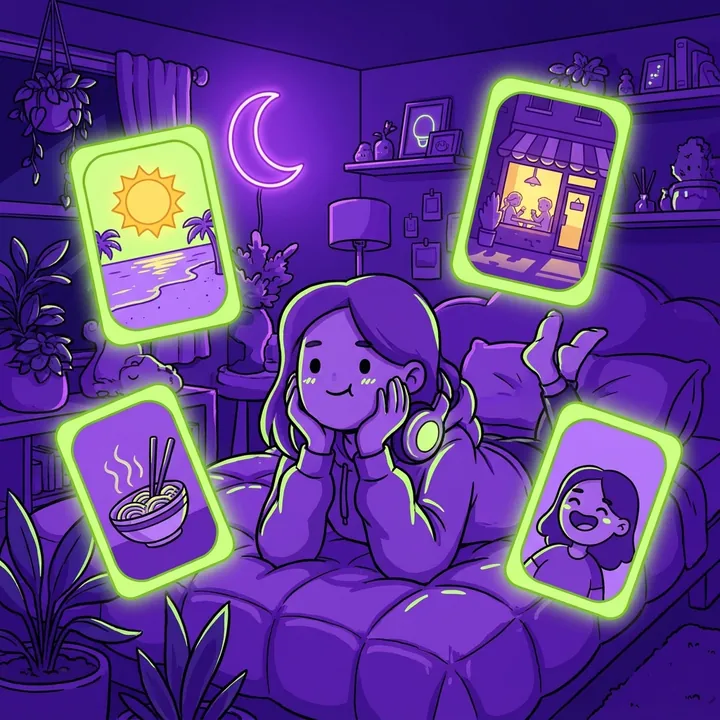
- Start from the year you just had. Before you open Pinterest, scroll your own camera roll and notes from the last twelve months and pull out the days you liked and the things you kept saying: your top day, your top place, the meal, the person. The board is built from that evidence. The Portugal photo that has been on three boards and never happened gets retired; the Sunday walk you did eleven times gets promoted. If you have been talking your evenings through with Flamy in Cave, this is the week to read the memory back: it is sorted by topic, so what you said about work over the past months is one page, not a scroll.
- Five or six pictures of the doing. From the list, or your own. More than eight and the ones that matter hide among the ones that were pretty.
- One honest corner. The obstacle, photographed without flattering it, and the line under it saying what you do when it shows up.
- A date on everything. Not the deadline for the dream; the month the first step happens. "Portugal" is a wish. "Flights booked by March" is a Tuesday evening in March, and it is also a goal written the SMART way. If you want the full version on a card, the SMART goal builder turns a line like that into one in five questions, and the card can go on the board next to the picture.
- Decide now when you will look at it. First Sunday of the month, ten minutes, in front of the board. A board you look at whenever you happen to pass it is a board you stop seeing by February, and ten minutes a month is more than most boards ever get. If the board is also where your New Year's resolutions live, this is the step that decides whether they survive January.
Digital or physical vision board?
Whichever one you will actually be in front of on the first Sunday of the month. The honest differences:
| Physical board | Digital board (lock screen, Canva, Pinterest) | |
|---|---|---|
| Where you see it | One room, every day, until you stop seeing it | Forty times a day, until you stop seeing it |
| Changing it | Scissors and glue, so a change is an event | Two taps, so a change is a Tuesday |
| Your own photos | Need printing, which is why most boards end up made of magazines | Already there; this is the digital board's real advantage |
| The paper the year leaves behind | Tickets, a receipt, a polaroid go straight on | Have to be photographed first |
| The honest corner | Easy to leave off because it is ugly | Easy to leave off because it is ugly |
| The monthly look | Sit down in front of it | Open the file on purpose, not in passing |
The last row decides it. A lock screen is seen constantly and looked at never, so if you go digital, the monthly ten minutes have to be a file you open on purpose.
What do you do with a vision board after you make it?
You come back to it, and you say something each time. On the first Sunday, go piece by piece: what moved, what did not, and what the honest corner caught. Say it to someone who will ask about it again in a month: a friend, a partner, an accountability partner. They are not there to cheer. They are there to ask, in March, how the Tuesday swim is going.
The board is the year you want. Cave paints the year you are having. Every week you talk through with Flamy, the small flame you chat with there, becomes an illustrated highlight built from what you actually said that week: the swim you made it to, the dinner you cooked, the call you finally made. Put the highlights next to the board on the first Sunday. One is January's picture of the year; the other is the year as it is turning out, and the gap between the two is the most useful thing a board can show you, and the thing a board on its own never does. What you said stays too, in a memory you can open and read, sorted by topic, so when you bring up the swim in March, Flamy knows which Tuesday you meant. And in December, when the board comes off the door, the question is not whether the pictures came true. It is what you would tell the January you who put them up, and next year's board starts from that answer.

If nothing wanted to go on the board at all, if every idea above felt like someone else's, the problem sits upstream of boards and goals, and what you actually want is still the open question. It is worth a few evenings before the scissors come out. And if the pictures you want are five years out rather than one, those are life goals, and they need a different kind of looking after.
FAQ
What should a vision board include?
Pictures of you doing the thing, not of the result: a desk at 8:40 rather than a job title, running shoes rather than a finish line. Five to eight, mostly your own photos, each with the month of its first step written on it. One should be the obstacle: what usually gets in the way, with a line under it saying what you do when it shows up. Fewer than five is a list; more than eight is decoration.
What are the 5 categories for a vision board?
Career, money, health, relationships and personal growth are the five most boards use, and a fine place to start if each holds a step rather than a result: the morning you want, not the title. Above, career and money share a group, health is your body, relationships is people, and growth is your head plus things you make and learn. The sixth most boards leave off is the obstacle, with a line under it saying what you do about it.
What words belong on a vision board?
Instructions to yourself, not moods. "Shoes on before I sit down", "Tuesdays, 7 a.m." and "flights booked by March" each say what to do and when, so they still mean something in March. A single word like "abundance" or "growth" asks nothing of you, and the eye slides off it within a week. If a word on the board has no verb and no day in it, it is decoration. Dates count as words, and they are the best ones.
Do vision boards actually work?
Not by manifesting. The research on picturing a wished-for future points the other way: a vivid image of the result makes people feel less energetic and do less, because the body treats the picture as the win. What does work, in the same research, is picturing the steps and the obstacle. A board made of steps, looked at on a schedule, is a plan you can see, and a plan you can see gets done more often than a wish.
How often should you look at your vision board?
Once a month, on a fixed day, ten minutes, out loud. Go through each picture and say what moved and what did not, to someone who will ask again next month. In Cave, Flamy keeps what you said in a memory you can open and read, and paints an illustrated highlight of every week from what you told it, so the year you are having sits next to the one on the board.