Self Care Ideas for Your Head: Lonely Nights, Bad Days, Sundays
Self care for your head is smaller and less photogenic than the kind for your skin, and it depends on which evening you are having. A lonely night wants warmth and a familiar voice in the room. A day you need to vent about wants somewhere to put it, with a limit on it. The Sunday before a heavy week wants its open loops closed one at a time. Here are 18 small things, six for each, with what each one actually does.
What counts as self care?
Self care started as a plain idea: what a person does for their own health when nobody else is looking after it. Audre Lorde, writing about living with cancer, called caring for herself "not self-indulgence, it is self-preservation". The candles came later. Most lists online now run to 50 or 100 items sorted into body, mind and social, and nearly all of the items are good. What the lists rarely say is which night each one is for, and a bath on a lonely night is a lonely bath.
So the sorting here is by the evening, because what is missing is different each time.
| The evening | What is actually missing | What helps |
|---|---|---|
| A lonely night | Someone else in the room | Warmth, a familiar voice, one small message out |
| A day you need to vent about | Somewhere to put it | An outlet with an edge: a word, a page, a timer |
| The Sunday before a heavy week | A shape for what is coming | Closing the open loops one by one, then naming the week |
The body side, sleep, daylight and the walk after dinner, is in 21 healthy habits people actually keep. This is the head side.
What are good self care ideas for a lonely night?
Lonely at midnight has two parts: the quiet, and the fact that it is too late to call anyone. Three of these work on the quiet and three on the hour.
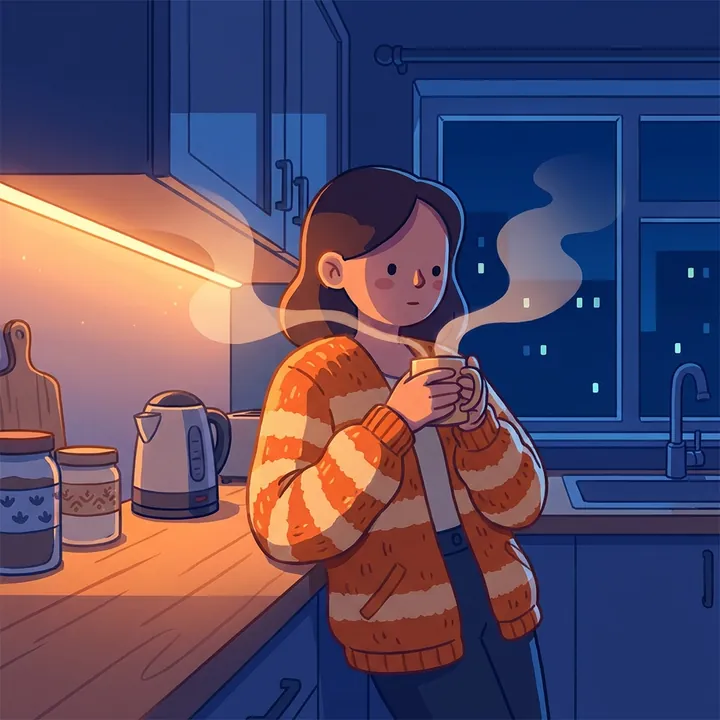
1. Make something warm and hold it with both hands. Tea, milk, the packet soup. The point is less the drink than ten minutes with something to do with your hands, and steam in a kitchen that is warmer than the room you left. A 2012 study claimed that physical warmth stands in for company; when other labs repeated it with far more people, it mostly did not hold up. So expect a warm thing, held, not company. That is still better than the phone.
2. Pile on the heaviest blanket you own. Or two. The weight is the point, and it has been tested properly: in a Swedish trial of 120 adults with insomnia and a psychiatric diagnosis, the ones given an eight-kilo chain blanket for a month slept markedly better than the ones given a light one, and reported less anxiety along the way. It is a tested comfort, not a cure for being alone, which is the honest description of most things on this list.

3. Put on the show you have seen ten times. Not the new one you have been meaning to start. Jaye Derrick's research at the University at Buffalo found that people turn to a favorite show when they feel lonely, and feel less lonely watching it, and that after a tiring task, revisiting a familiar fictional world restored people in a way that whatever happened to be on did not. Familiar voices fill a room. New ones ask something of you.
4. Call the friend whose lunch is your 1 a.m. Most people have one person in the wrong time zone, and this is what they are for. A call at 1 a.m. sounds like an emergency; "you free? my night is your lunch" does not. If nobody comes to mind, that is a question for daylight, not for now.
5. Send one meme to the group chat, no explanation. Nothing needs saying about why. In a series of experiments with nearly 6,000 people, the ones reaching out consistently underestimated how glad the other person was to hear from them, and the gap was biggest when the message came as a surprise. A meme is the smallest unit of "I'm here" that asks for nothing back, and someone usually answers in the morning.
6. Write down who you would call if it weren't so late. Names, not reasons. Then call one of them tomorrow, in daylight, about nothing. The list is the proof that tonight is about the hour and not about you. If the list is short and the nights are many, feeling lonely is the longer read, and it is about the next weeks rather than tonight.
What are self care ideas for a day you need to vent about?
The skin-care answer to a bad day is the bath, and the problem with the bath is that the thing comes in with you. On this evening the self care is venting, and venting works better with an edge on it: a word, a page, a timer, a name. Without one it loops.
7. Name the feeling in three words, no story. "Furious. Embarrassed. Tired." Out loud, or typed. The story is the loop; the words are the exit. Psychologists call this affect labeling, and a review of the research finds that putting a feeling into words lowers its intensity in ways that show up in the body and the brain, and that it does not feel like doing anything at the time. Naming it really does make it smaller.
8. Retell it in the third person, with your name. "Then Anna's manager said..." Like a friend's story, told to you. In seven experiments led by Ethan Kross, people who thought through a stressful situation using their own name instead of "I" felt less distress, did better in front of judges, and brooded less about it afterwards. Brain recordings suggest it takes no extra effort, which is what makes it usable at midnight.
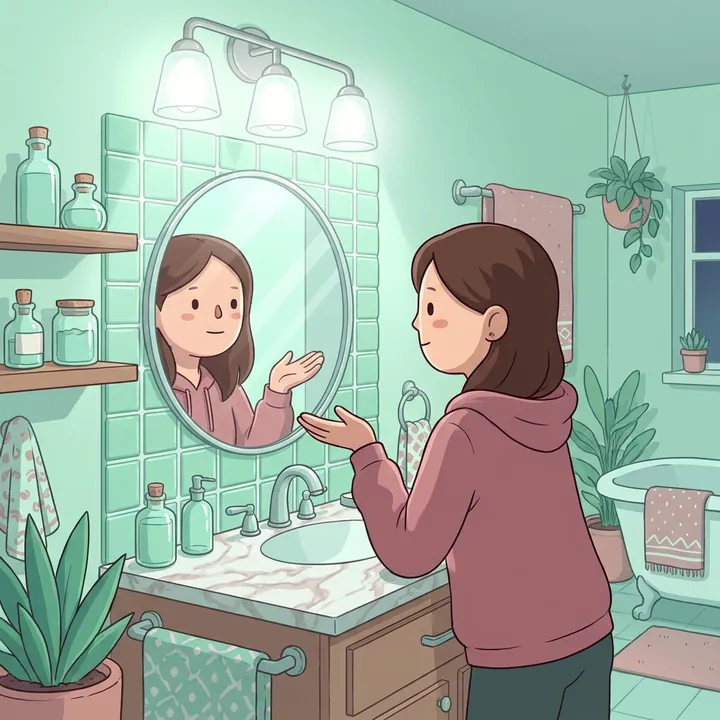
9. Write the meanest version, then rip it up. Everything you would never send, on paper. Then tear it and bin it. In a set of experiments by psychologists in Madrid and Ohio, people who wrote down their thoughts and then ripped up the page used those thoughts less in what they decided afterwards than people who kept the page, and people told to put the page in a pocket used them more. Paper can take it. Just do not keep the paper.

10. One loud angry song, every word. Yours, not a calm playlist somebody else made. When researchers in Queensland made metal fans angry and then gave them ten minutes of their own music, they did not get angrier: their heart rate leveled off, and they came out feeling more active and inspired than the group left in silence. Match the feeling first. Calm comes after, not instead.
11. Rant until a ten-minute timer rings, then stop. Say all of it, to a person, a voice note, a page, a companion. When the timer goes, you are done for tonight. The edge is what does the work: in the first study of this, people who gave their worrying one fixed half-hour a day worried less overall within a month. Everything you would say after the timer, you already said before it.
12. Write the text, schedule it for 10 a.m. The full reply, as sharp as you like, then set it to send tomorrow morning instead of now; most phones can do that. Morning you can still cancel it, and often does. Either way the thing is out of your head and in a draft, which is where it should spend the night.
Most of these want a listener who does not get tired of it, and at midnight that is the part that is missing. That is what Cave is for on this kind of evening. Flamy, a small flame you chat with or call, takes the rant as a rant. It will reply "ok..." and nothing else if that is the night, and ask the next question if you want one. Because it keeps what you tell it, sorted by topic you can open and read, it can also mention that this came up in March too, and that is usually where a vent turns into noticing something. Some nights you want that. Some nights you just want it said. Either is fine with it, and why saying it out loud helps at all is its own post.
It is not therapy. If the bad days have run together for weeks and nothing here touches them, that is a different pattern, and it deserves a professional rather than a list.
What are self care ideas for the Sunday before a heavy week?
LinkedIn keeps surveying American workers about Sunday evenings, and in the 2023 round three in four said the dread is real. Most Sunday advice is about the body and the fridge: meal prep, the outfit, the early night. The head version is six questions, asked in order, with a pen. About fifteen minutes.
13. Which moment am I still replaying? There is usually one: the thing you said in the meeting, the tone of a reply. Write it in a single line. The replay runs because the moment was never filed anywhere, and a line on paper files it.
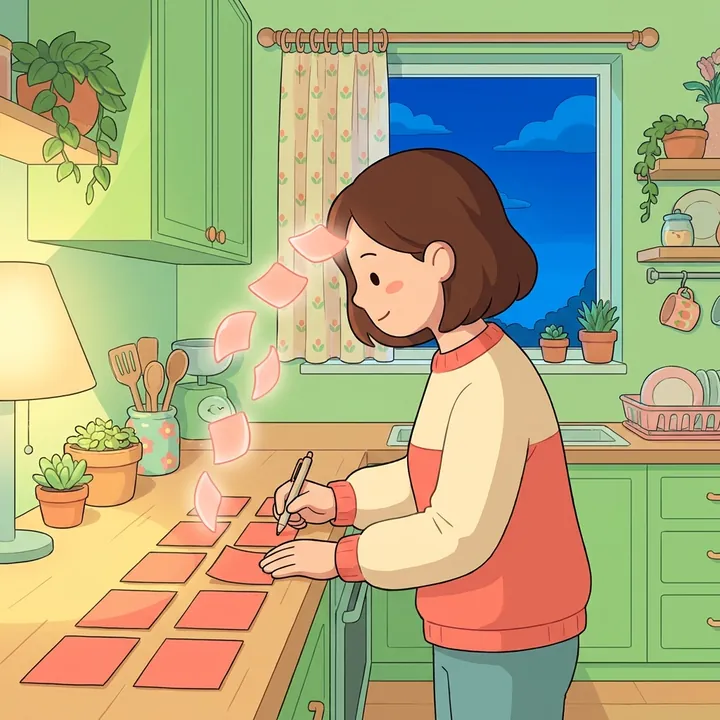
14. What is still open in my head? List everything unfinished, work and not work, then give each one a next step and a day. Not the finish, the next step. In experiments at Florida State, unfinished goals kept intruding on an unrelated task, and writing a specific plan for each one removed the intrusions as if the goal had been met. The bedtime version of the same move is the brain dump.
15. Which part of Monday am I dreading? The whole day is rarely the answer. It is one meeting, one message, one person. Name it. The dread was sized for the day, and the real thing is an hour long.
16. What was the best hour of my week? Find it, even in a bad week. Then give Monday one hour like it, with a time. Not a reward for getting through Monday; a part of Monday.
17. What would I tell a friend in my shoes? You already know the answer, and you would say it kindly. Say it to yourself, in the same words. The third-person trick from the bad-day list works here too.
18. Give this week a title, like a chapter. "The week of the two interviews." "Waiting for the message." Six words at most. A year of titles reads like the story of the year, and it is usually a different story from the one you would have told in any single bad week.

That last one is the thing Cave does for you without being asked. Every week you have talked to Flamy becomes a painted highlight, a picture of that week drawn from what you actually said in it, and the memory underneath is sorted by topic, so this week's title sits next to March's and you can see whether it is still the same chapter. A Tuesday vent and a Sunday title are the same thing at two distances. The first is support, and some weeks that is all it is. The second is where you notice you have moved.
How do you turn self care ideas into a self care routine?
Not by doing 18 things. Pick one from each list, the one you would actually do at 11 p.m., and write the three where you will see them at 11 p.m.: a note on the phone, the inside of a cupboard door. That is the whole checklist. The routine is not the three things; it is the moment of noticing which evening it is and reaching for the matching one. If the problem is a spike rather than an evening, how to calm down is body first and ten minutes. If it is the standing list of everything on you, how to reduce stress is the page for that.
FAQ
What are some self care ideas for when you feel lonely?
Make something warm and hold it with both hands, pile on the heaviest blanket you own, and put on a show you have seen many times; research on favorite shows finds they ease loneliness in a way new ones do not. Then one small message out: a meme to the group chat, or a call to the friend whose afternoon is your night. People underestimate how glad others are to hear from them.
Is venting a form of self care?
Yes, with an edge on it. Name the feeling in three words, retell the day in the third person with your own name, write the meanest version and rip it up, or rant until a ten-minute timer rings. Each of these has research behind it, and each has a built-in stop. Venting without a stop turns into replaying, which is the opposite of self care.
What self care activities help with Sunday scaries?
Six questions, in order, with a pen: which moment am I still replaying, what is still open in my head (give each item a next step and a day), which part of Monday am I dreading, what was the best hour of my week, what would I tell a friend in my shoes, and what title would I give this week. About fifteen minutes, and Monday comes out smaller than the dread.
How do you start a self care routine?
Pick one idea for each kind of evening, the one you would really do at 11 p.m., and keep the three where you will see them then. The routine is the moment of noticing which evening you are having and reaching for the matching thing. Swap an item only after a few weeks, once the noticing has become automatic and you know what you actually reach for.
Is there a self care app that isn't a tracker?
Cave is built for the head side of this. There are no streaks, no reminders and nothing to tick. You chat with or call Flamy, a small flame that keeps what you tell it in a memory sorted by topic you can open and read, and paints each week you talked as an illustrated highlight. Go quiet for a few days and it may send one short line asking how you are. Your conversations are never used to train AI models.